
No Butts

For many addicts we have one vice we have a hard time just letting go. For many in recovery it is smoking. As non-smokers can understand, you arrive or leave an Alcoholics Anonymous meeting only to be overwhelmed by all the smokers who tend to hang out at the front door. I was one of them. But I, just like alcohol, made a decision to stop for the rest of my life. It’s not easy saying goodbye to your best friend you’ve had for 37 years. But I can relate. It’s just like any other addiction. For me, it’s “One Day At a Time”.

To my surprise, the first day without a cigarette was relatively easy. Honestly, I had three strong cravings all day. The first walking to my first AA meeting of the day. The next after I ate dinner at night. Finally the last, when I was done with my day and heading off to bed.

I did not go cold turkey, as I immediately have put a NRT patch upon waking up. Based on my own experience of trying to stop smoking in my past, the patches helped me “stay stopped” successfully. The challenge right now is filling my hands with something to do when the cravings start.

As I shared at a meeting yesterday, I am applying the same principles of AA to quit smoking. While I’m looking for some positive reinforcement in my decision to do so, many dismiss me. Doing so just makes my determination stronger. An old timer, who’s been smoke free for many years now, pointed to the toothpick he always chews when at an AA meeting. I responded with, “I’ll try that…I’m being honest, open-minded and willing, just as I am in AA”

Just like when I quit alcohol, the first few hurdles are the physical craving and mental obsession. The cravings come when my body says, “Hey, we’re missing something here.” My body is expelling those toxic chemicals, just like alcohol, that in the end want to kill me. For those who quit cold turkey, I applaud you because without the NRT, I highly doubt I would have gotten through the first 24 hours. The mental obsession as we know from our addiction takes time. Dammit, I want it all to go away, NOW! **great laughter** . I’ve been down this road before haven’t I?

Right now, it’s all about Step 1 to Step 3. I know I’m powerless – if I smoke one, I’m off to the races again and I can’t stop. Step 2, I “believe in a Power greater than myself WILL restore me to sanity” – I trust this will happen, giving it time. Lastly, Step 3, I “turn my will and my life over to the the care of God (or Higher Power) as I understand Him”. I’m not alone, my Higher Power is there to help me, if I let Him.

I say this as another craving sets in because I’m about to walk to outpatient treatment. Typical routine – smoke a cigarette. But just writing those three Steps, the obsession is NOT there, the physical craving has already lessened and I’m not even out the door. I know the program works, I just have to trust the process.
Let’s Talk Religion in Recovery

religion_kindness
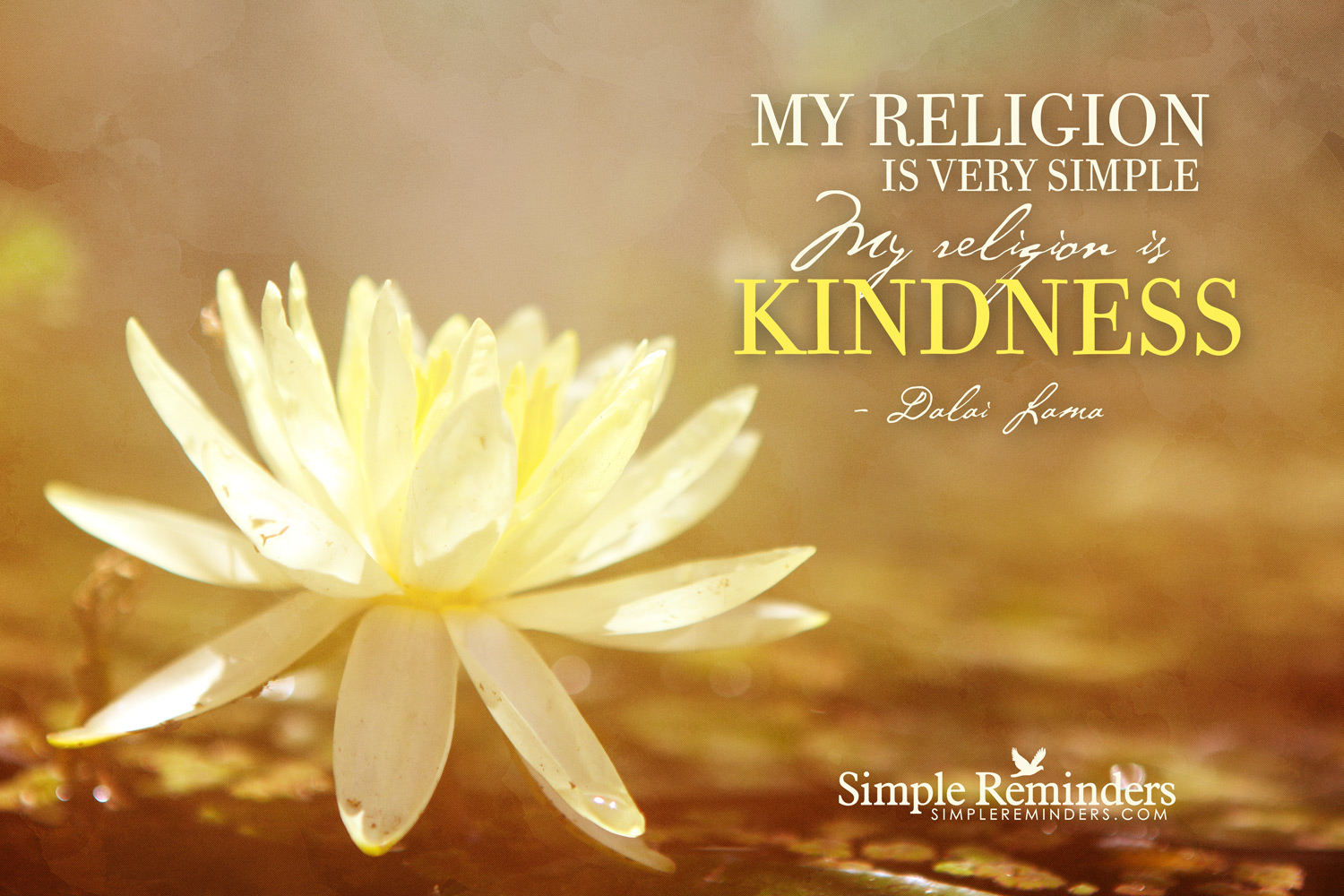
“My religion is very simple. My religion is kindness.” 
— Dalai Lama

The discussion of religion tends to be a taboo subject; religions are beliefs and practices of a very personal matter. People avoid the topic at all costs unless surrounded by like-minded individuals. Figuratively, people start to bring out their pitchforks and stakes at even the hint of such a discussion. For those in recovery, it is the pink elephant in the room rearing its ugly head. Can you imagine my thoughts, in early sobriety, when the topic of Christianity was discussed when I knew I was gay and a practicing pagan?

Recovery programs were founded with the principles of Christian beliefs in mind. However, the founding members recognized the diversity of those seeking recovery, insisting recovery should be a spiritual program. And yet, people tend to forget those of us who are just beginning our journeys in recovery either: lost faith in our religion (whatever that may be); tried a religion as a solution finding that we drank again; didn’t have a set of religious beliefs to begin with; or, like myself, having a strong belief system and/or a strong self-identity, were shunned because those beliefs don’t conform to those who set down the guiding principles of the program.

When I began my journey in recovery I was a broken human being: physically, mentally and spiritually. I didn’t know who I was, where I was going nor a sense of purpose in life. My addiction took all that away. The concept of spirituality was foreign to me. Like most, when the topic of religion was thrown into the mix, I was more confused on how a program of recovery was going to help me.

Spirituality is the cornerstone of a recovery program. A recovery program is not simply going through the 12 Steps with a Sponsor and “applying those principles in all our affairs”. Recovery is a process of finding yourself and your purpose in life, no matter what your religious beliefs, if any.

“The point is, that we are willing to grow along spiritual lines. The principles we have set down are guides to progress. We claim spiritual progress rather than spiritual perfection.” – Big Book of Alcoholics Anonymous, page 60.

I am NOT saying a religion should not be part of a person’s recovery program. (Nor am I suggesting that “God” be removed or renamed for any reason.) For some, a religion provides more inclusion and strength. However, in early sobriety, it is suggested, “[We] Came to believe that a Power greater than ourselves could restore us to sanity.” This understanding doesn’t happen overnight. Spirituality, a belief system of a religion, and continuous sobriety are life-long practices.

We should remind the newcomer to build their foundation of spirituality (not an understanding of a religion) in Steps 1, Step 2 and Step 3. The first three Steps are essential to continuous sobriety. Even after, we cross the bridge to much harder work within ourselves with the help of their Higher Power and their Sponsor. Lastly, we start to resolve issues within ourselves. Perhaps, only after all Steps are completed and they have begun “practicing these principles in all our affairs” it would be appropriate to breach the subject of religion.

What are your thoughts about discussing religion with newcomers to the program? Should the discussion of religion take place in early sobriety?

Adopting the Minimalist Lifestyle

minimalism-min

Most of my life, both in active addiction and recovery, I have stockpiled crap. During my active addiction, it was like another obsession, “I could always use this later . . . ” However, during my sobriety, its more on the lines of, “I don’t want to lose this . . .” With my pending move to a new home, I’ve decided to adopt a new minimalist lifestyle. As Step 12 suggests, “. . . , practicing these principles in all our affairs.”

First, I put a twist on the most common slogan, “One Day at a Time”. In this case, taking the monumental task of just one section of the current home. After reading hundreds of articles on a minimalist lifestyle, I finally got my arse up away from the computer to tackle the walk in closet.

I took a tape measure out from a toolset (one I’ve never opened) measuring the space to be approximately 5 feet deep by 7.5 feet tall. It was stacked with stuff about 4 feet. Bags of JUNK from front to back. There are old computer parts (printers, screens, misc., etc.) and bags of unknown origins. So I took the most difficult step for me – throwing it all away. While some of it sits in the front room, a quarter of it sits in my car ready to be hauled to a willing commercial trash can.

It was a difficult task. Part of me, the new me, didn’t want to bother looking into the bag. If I didn’t know what it was – trash pile. On the other hand, there were strong impulses to go through each bag, “Just in case, you may need something . . .” It reminded me of my early days of sobriety. So, I adopted the same principles like I do in my sobriety:

  1. We admitted we were powerless over alcohol the compulsion to save things –that our lives had become unmanageable.

Like in sobriety, I admit complete defeat. My Gods, I’ve buried my Self in a pile of JUNK over 4 feet high! Why? Because of my fear of losing things in my life again. I’m accepting the truth of the situation. I don’t and can’t live this way anymore. There is no need. I’m attempting to hold on to material things which, in reality, have no meaning in my life anymore. They are just things. I should no longer fear losing everything. I have to let it go!

Already, I have a sense of relief and sadness. I’m relieved the task if over. It’s been years, day after day, I told myself I would get rid of everything. Now the junk is out on the floor and ready to go! It’s like writing Step 1 on paper. Yet, part of me feels sad I’m throwing a part of my life away. Am I? Perhaps I’m not “throwing a part of my life” but simply “closing another chapter in my life, getting ready to write a new one”!

I made a promise to myself of change. I”m moving to a brand new place with the absolute minimum. It’s like writing a new chapter in my life on a blank page. I’m actually excited. I don’t know what the future holds, as it has yet to be written. But I do know this, We are going to know a new freedom and a new happiness.” That is the goal and I’m just one Step, closer!